Time to decompress
A calm first chapter allows the dog to observe, rest, and understand a new household without being asked to perform immediately.
Adult & retired Schnauzers
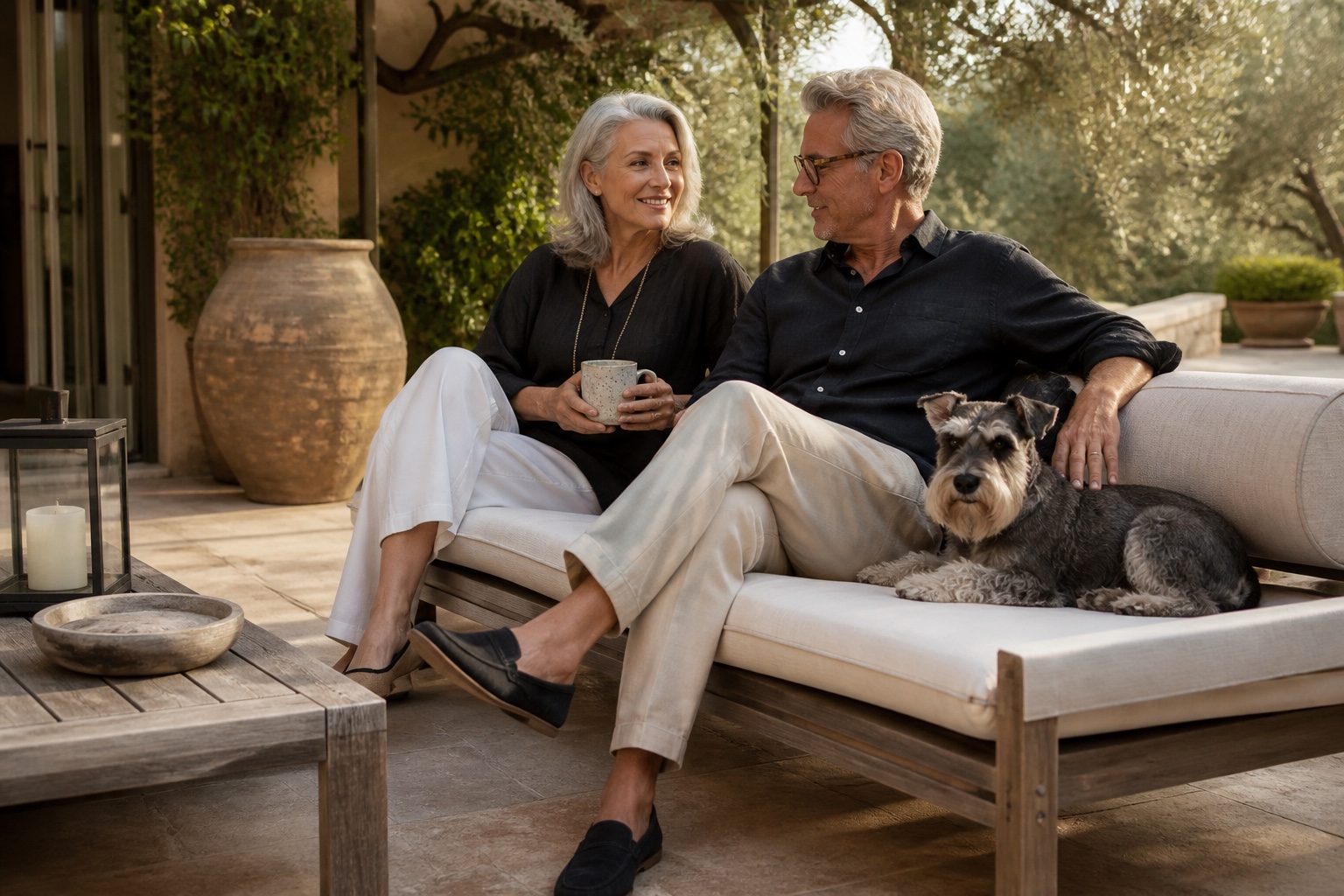
For some families, the right companion is not a puppy. A mature Schnauzer can bring an established presence, a more visible temperament, and a beautiful opportunity to begin somewhere beyond the first chapter.
A responsible placement
A mature dog may move beyond certain puppy stages, but adoption still asks for patience, preparation, and a willingness to meet the individual dog exactly where they are.
A calm first chapter allows the dog to observe, rest, and understand a new household without being asked to perform immediately.
Every adult arrives with experiences, preferences, and needs that deserve honest attention rather than comparison with a puppy.
Predictable meals, walks, rest, boundaries, and communication build security more effectively than constant novelty.
Placement is not a trial of convenience. It is a considered commitment to care for the dog through every season ahead.
Companionship, considered
A mature dog may offer the reassurance of a more visible personality, established preferences, and a steadier rhythm.
That can be especially meaningful for individuals, couples, and retirees who value companionship without beginning at the earliest puppy stage. It is never an automatic match. Activity level, strength, grooming, veterinary needs, household support, and the dog’s own history remain part of a responsible decision.
The goal is not to choose an adult because less is expected. It is to choose an adult because the life you can offer and the life that dog needs genuinely belong together.
What families can expect
Known historyAvailable health, veterinary, household, and behavioral information is discussed candidly.
Individual evaluationTemperament, energy, handling, environment, and household compatibility guide every conversation.
Transition planningWe prepare for decompression, introductions, routines, grooming, and the practical realities of the first weeks.
Continued connectionQuestions do not end on placement day. Responsible support helps the relationship develop with confidence.
Available adult companions
Adult and retired Schnauzers are not continuously available. When a placement is appropriate, we begin with a private conversation about the dog, the household, and the long-term care both deserve.
Begin a thoughtful conversation ↗Adult placement · questions, answered
An adult deserves more than enthusiasm. These questions help begin a responsible and transparent conversation.
Circumstances vary. A dog may be retiring from a breeding program, may be better suited to a different household, or may need a new home because of a life change. We share the known history and reason for placement as openly as the dog’s wellbeing allows.
No. Age and training are not the same thing. Some adults have strong household foundations; others may need help adapting to unfamiliar routines, environments, surfaces, sounds, or expectations. We discuss the individual dog—not an assumption based on age.
There is no universal timeline. Some dogs settle quickly, while others need weeks or months to feel completely secure. Quiet decompression, predictable routines, patience, and limited early demands give the relationship room to develop honestly.
Possibly, depending on the dog’s temperament, history, and comfort. Household composition is evaluated individually, and careful introductions remain essential. A placement is never made from a breed or age label alone.
For the right person and the right dog, absolutely. A mature companion may offer a more established temperament and a calmer daily rhythm. Health, strength, activity needs, support systems, housing, and contingency planning still deserve a candid conversation.
A permanent one. Adult placement requires time, financial readiness, veterinary care, grooming, training when needed, and respect for the dog’s history. The goal is not simply to provide a home, but to provide the right home for the rest of the dog’s life.
The invitation
Tell us about your home, daily life, experience, support system, and the kind of mature companion you hope to welcome.